Michael Geertsen on finding your own artistic language
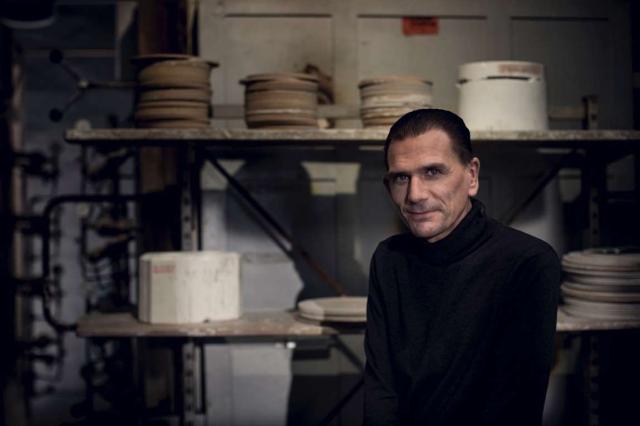
A conversation about clay, Bauhaus and artistic identity
How did you find your artistic expression?
"My point of departure was a reaction against the ceramics of the 1970s. A reaction against the insularity that suggested ceramics could only be a bowl or a vase.
It started when I was apprenticed as a potter in the 1980s, sitting at the wheel throwing stoneware with coarse grog. After completing my apprenticeship, I trained as a ceramic artist at the Danish School of Arts and Crafts, where I also completed further studies in industrial design. There I was exposed to both a very free approach to form-making and a highly structured one.
With my head bowed and a great deal of humility, I would say that I see myself as a type of artist emerging from the Bauhaus tradition. Bauhaus was a design school with an artistic awareness that the refined, distilled product carries an important artistic agenda. If we are not to die spiritually, it is essential that designers and sculptors continue to shape the objects we live with every day.
That way of thinking has influenced my visual language. I am classically trained, and it shows in my work."
Is contemporary art too influenced by the idea of “what do you think yourself?”
"In my view, one of the greatest mistakes of late modernity is that we place everything in the hands of the individual. There is no longer any artistic consensus. The trend seems to be that you can take a kiln shelf, throw two kilos of clay onto it, pour over a few oxides and fire it as hard as possible, and somehow that is considered enough. I find it difficult to respect that as an artistic statement. On that particular point, I suppose I am a grumpy old man.
I believe art is rooted in mastery, not in the idea that once something can be done well, it ceases to be art. I do not believe in the concept of 'free art'. We are all standing on the shoulders of previous generations, and it is naive to think that we possess some unique abilities today.
That conflict becomes especially clear when you begin studying historical works seriously. You are brought to your knees when confronted with the porcelains of the Song Dynasty. No matter how skilled we become or how much we experiment, we can only ever produce a pale reflection of what they achieved. We barely reach their ankles.
At the same time, we must acknowledge that there are limits to what an individual can accomplish today. Being a ceramic artist now is very different from working in an imperial workshop where your sole purpose in life was to perfect a single celadon bottle for the emperor.
Yet we see traces of the same ambition throughout history. We need look no further back than the World Expositions a century ago, where nations competed through their achievements: 'We make the finest tractors.' 'We make the finest porcelain.'
I would rather have that benchmark than today's tendency towards believing, 'I am the greatest person ever to walk the earth.' If you claim that, without training, you can surpass a master ceramic artist who spent a lifetime perfecting imperial celadon vessels, you are being naive. The unfortunate reality today is that some art schools fill young artists with so much hot air that they end up floating away."
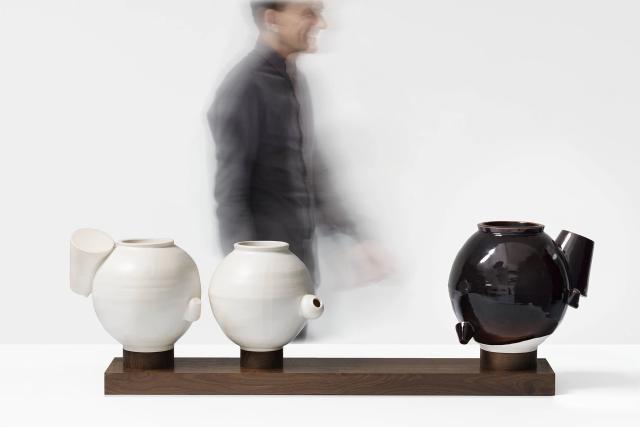
How did you find your artistic expression?
"My point of departure was a reaction against the ceramics of the 1970s. A reaction against the insularity that suggested ceramics could only be a bowl or a vase. It began when I was apprenticed as a potter in the 1980s, spending my days at the wheel throwing heavily grogged clay. After completing my apprenticeship, I trained as a ceramic artist at the Danish School of Arts and Crafts, where I also pursued further studies in industrial design. There, I was exposed to both a very free approach to form-making and a highly structured one. With humility, I would say that I see myself as an artist working within the Bauhaus tradition. Bauhaus was a design school founded on the belief that refined, distilled products carry an important artistic purpose. If we are not to become spiritually impoverished, it is essential that designers and sculptors continue to shape the objects that surround us in everyday life. My visual language is deeply influenced by the fact that I am classically trained."
Is art today too influenced by the idea of “what do you think yourself?”
"In my view, one of the greatest mistakes of late modernity is that we place everything in the hands of the individual. There is no longer any artistic consensus. The trend seems to be that you can take a kiln shelf, throw two kilos of clay onto it, pour over a few oxides and fire it as hard as possible, and somehow that is considered enough. I find it difficult to respect that as an artistic statement. On that particular point, I suppose I am a grumpy old man.
I believe art is rooted in mastery, not in the idea that once something can be done well, it ceases to be art. I do not believe in the concept of ‘free art’. We are all standing on the shoulders of previous generations, and it is naïve to think that we possess some unique abilities today. That conflict becomes especially clear when you begin studying historical works seriously. You are brought to your knees when confronted with the porcelains of the Song Dynasty (960–1279). No matter how skilled we become or how much we experiment, we can only ever produce a pale reflection of what they achieved. We barely reach their ankles. At the same time, we must acknowledge that there are limits to what an individual can accomplish today. Being a ceramic artist now is very different from working in an imperial workshop where your sole purpose in life was to perfect a single celadon bottle for the emperor.
Yet we see traces of the same ambition throughout history. We need look no further back than the World Expositions a century ago, where nations competed through their achievements: ‘We make the finest tractors.’ ‘We make the finest porcelain.’ I would rather have that benchmark than today's tendency towards believing, ‘I am the greatest person ever to walk the earth.’ If you claim that, without training, you can surpass a master ceramic artist who spent a lifetime perfecting imperial celadon vessels, you are being naïve. The unfortunate reality today is that some art schools fill young artists with so much hot air that they end up floating away.”
When can you call yourself a successful ceramic artist?
"Ideally, every practitioner should represent an artistic direction or a language of their own. Success comes when you can stand before people with a pot that is genuinely your own and not simply say, ‘Look, I can make a Lucie Rie pot.’ That is not interesting. When that happens, my response is simple: back to the studio, and show me what you can do when you are willing to take it one step further.
We are all standing on each other's shoulders, but some people simply copy and paste. That is something we cannot tolerate in the ceramic community. The moment you present a self-defined pot, you are a success. That has to be the answer. Every time someone copies, they weaken the market. It is perfectly fine if I can sense a little George Ohr in your work, but if it is copy-and-paste, I lose interest. Inspiration is one thing. Copying is another. Success also depends on what the right goal is for the individual. If your dream is to be accepted into the Spring Exhibition at Charlottenborg, then you are a success when you achieve that. If your goal is to secure a major order of mugs for a retail chain, then that is success too. As I said before, I come from the Bauhaus tradition, so I have just as much respect for people who create outstanding product lines as I do for those whose work ends up in art museums.”
Doesn't working with industry limit artistic freedom?
"Some ceramic artists may feel that working with industry clips their wings. I tend to see it differently. My question is: how much can we remove and still have a butterfly left? If you can maintain that balance, I see no problem in moving between different positions. Fundamentally, it is all about the same thing: mastering the clay. For example, I recently designed a porcelain lamp for Fritz Hansen. To me, being able to create unique, one-of-a-kind works is just as important as being able to develop defined products that meet a client's requirements. When you work with a company like Fritz Hansen, it simply will not do to cover everything in gold and decorative flourishes. I might try, but they remove it very quickly. That kind of resistance from a manufacturer can, in itself, be an artistic challenge.”